Vatican City is an independent state of 0.44 km² inside Rome and the smallest country in the world. It holds St Peter's Basilica, Bernini's square, the Vatican Museums with the Sistine Chapel, and the Vatican Gardens. You can see it on foot in a day, and both the basilica and the square are free.
Most people arrive at the Vatican expecting a Roman landmark and find a country instead. A tiny one, the smallest on the planet, but with its own flag, post office, anthem, guard and a head of state who also happens to be the Pope. It is worth keeping that in mind when you plan, because the entry rules, opening hours and even the closing days here are set by a state, not by a city council.
A country you can cross in twenty minutes
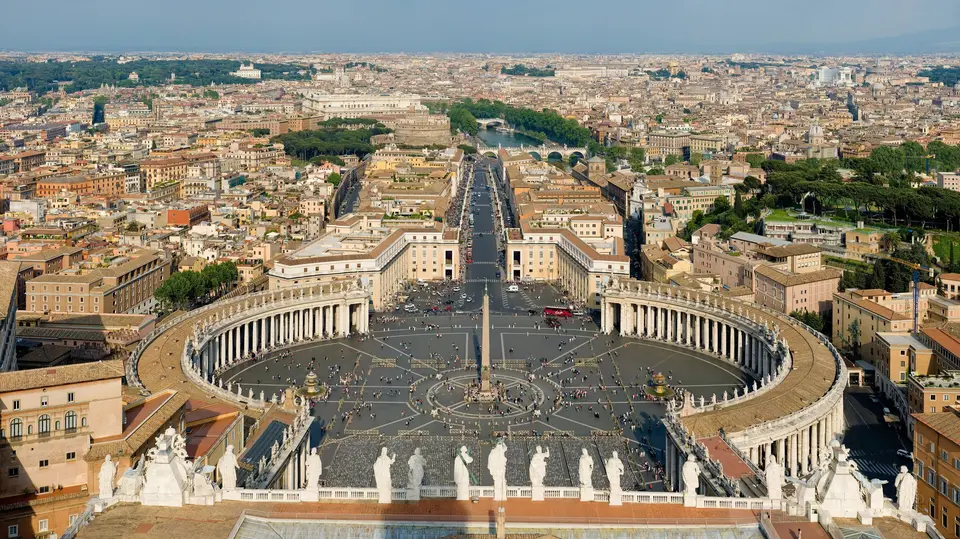
The state covers 44 hectares on the right bank of the Tiber, on a low hill almost entirely ringed by walls. On the square side there is no wall at all. The border with Italy is a strip of travertine set into the paving where the colonnade opens towards Rome, and thousands of people step over it every day without noticing.
It was born with the Lateran Pacts, signed by Cardinal Pietro Gasparri and Benito Mussolini on 11 February 1929. They settled the so-called Roman Question and gave the Holy See a territory of its own, designed to guarantee its independence from any government. Today it is an absolute monarchy in which the Pope holds legislative, executive and judicial power, and the whole site has been a UNESCO World Heritage Site since 1984.
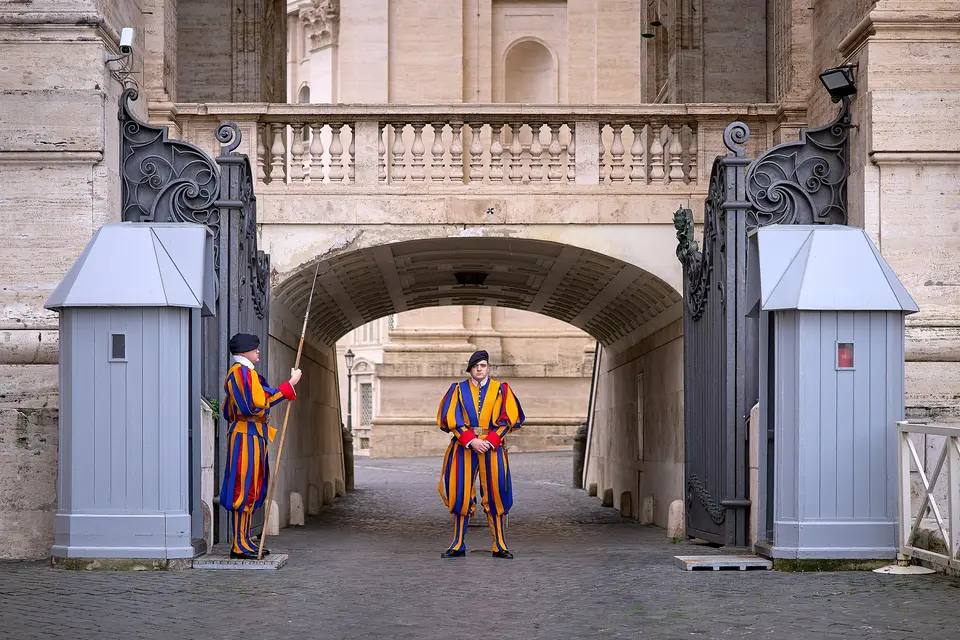
It has 882 residents. There are 618 Vatican citizens, and fewer than half of them live inside the walls. What surprises most visitors is that citizenship is neither inherited nor applied for. It comes with the post you hold and ends when you leave it, which is why so many of the people who sleep inside are Swiss Guards.
What to see in Vatican City, in order of priority
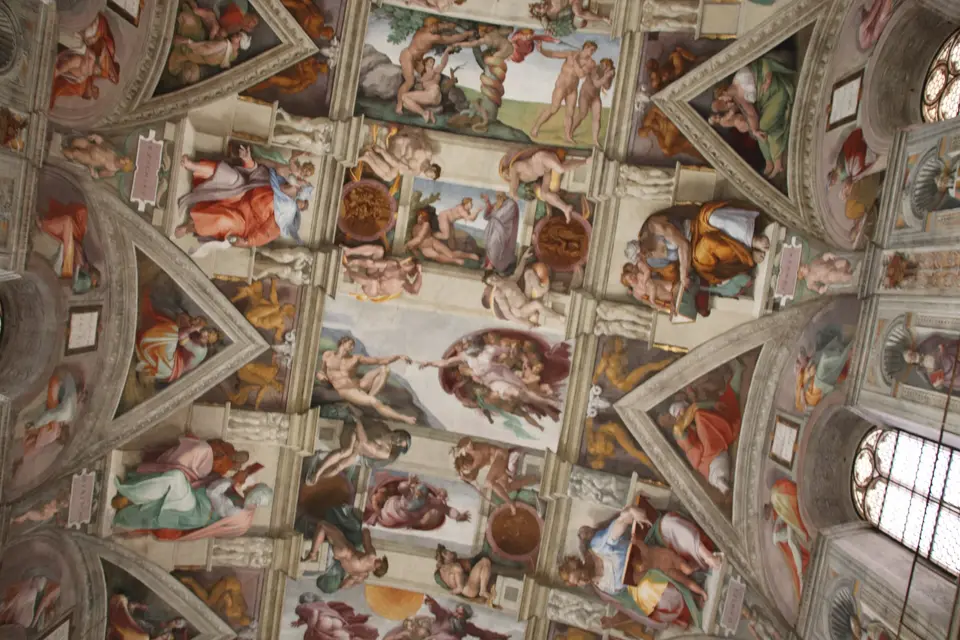
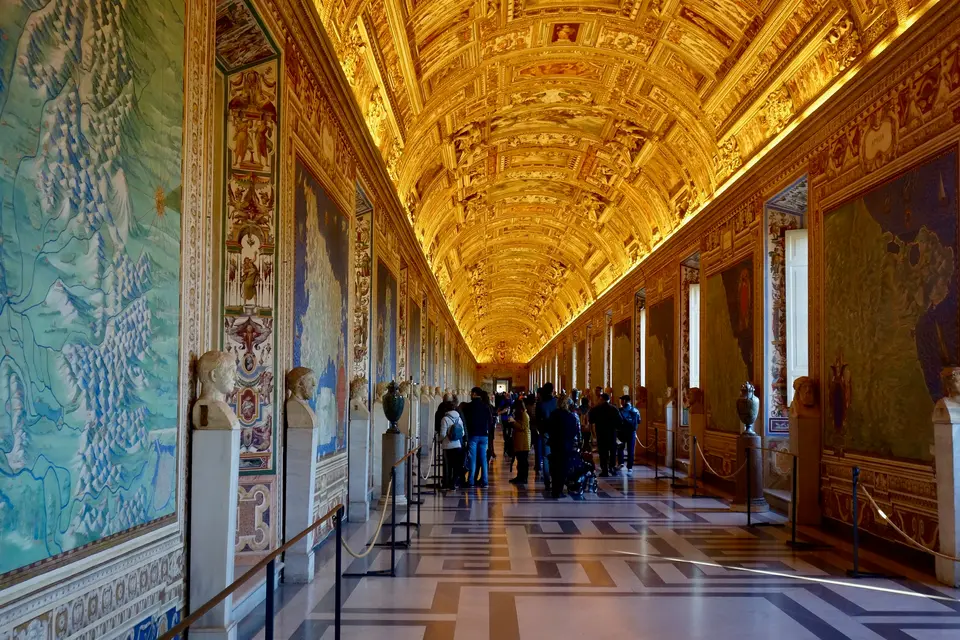
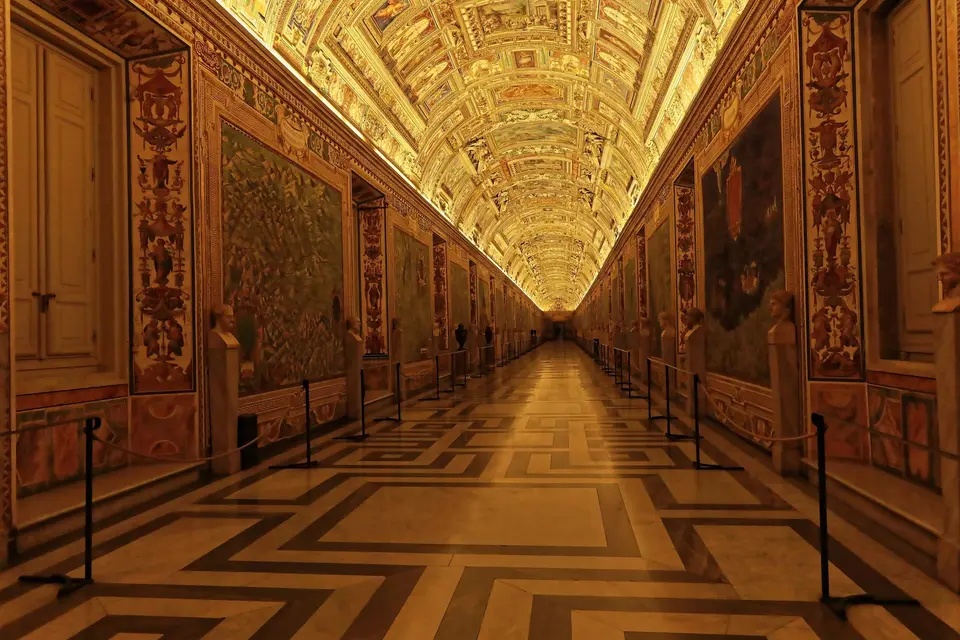
For a first visit I would put the Vatican Museums at the top. They are seven kilometres of galleries that end in the Sistine Chapel, and on the way you pass the Raphael Rooms, the Gallery of Maps and one of the finest collections of classical sculpture anywhere. This is the part that needs a timed ticket.
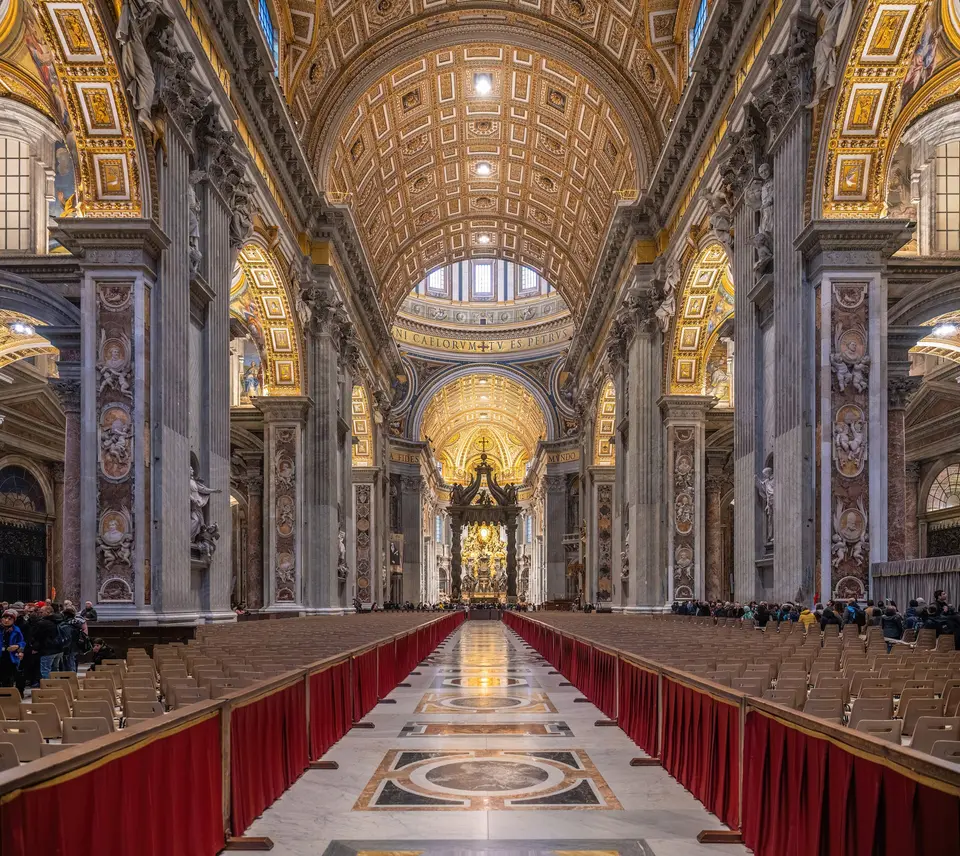
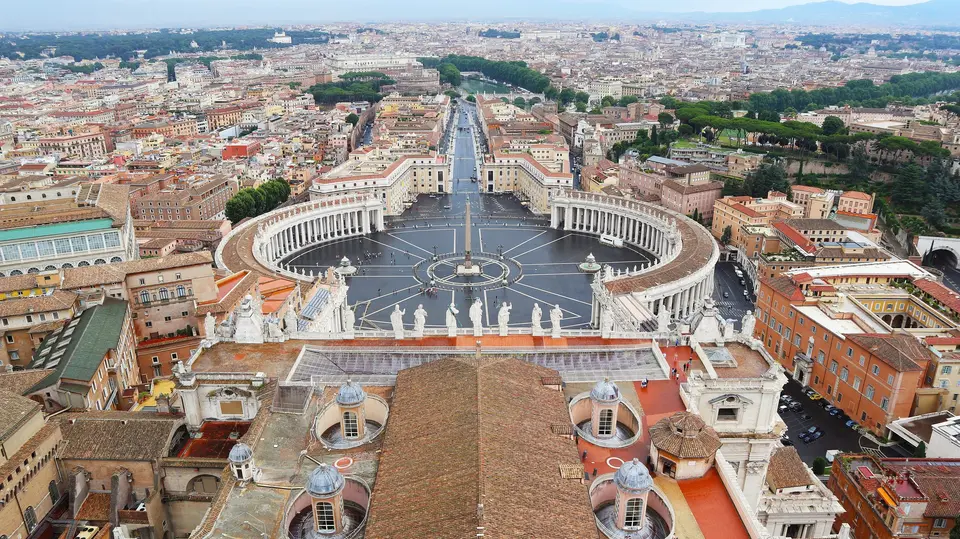
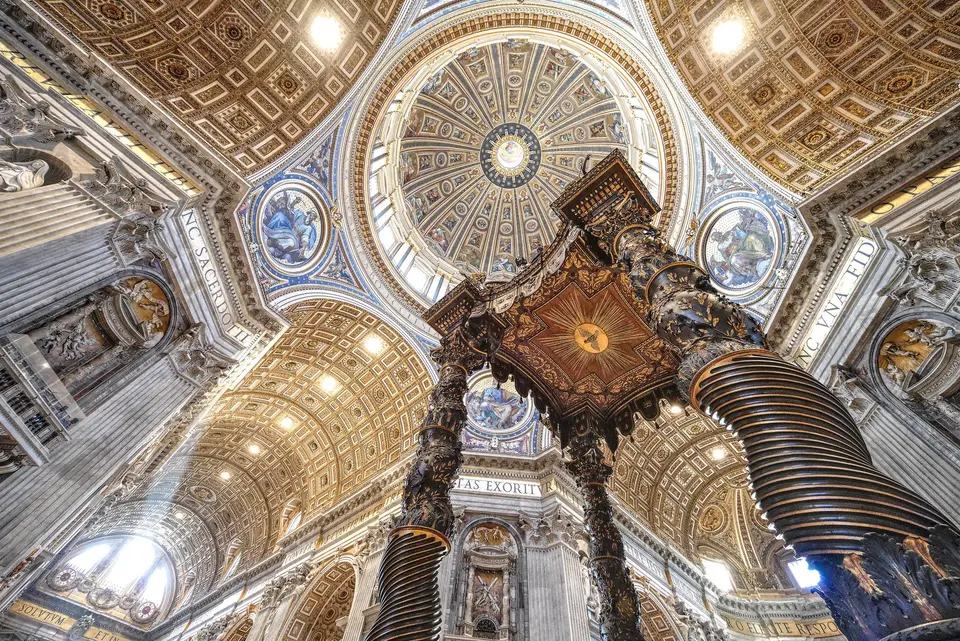
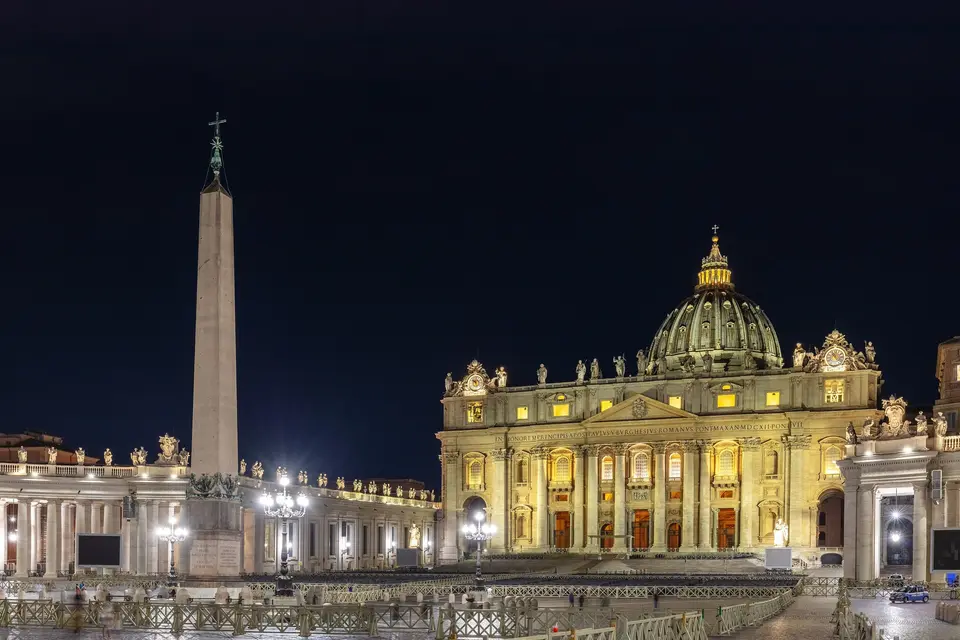
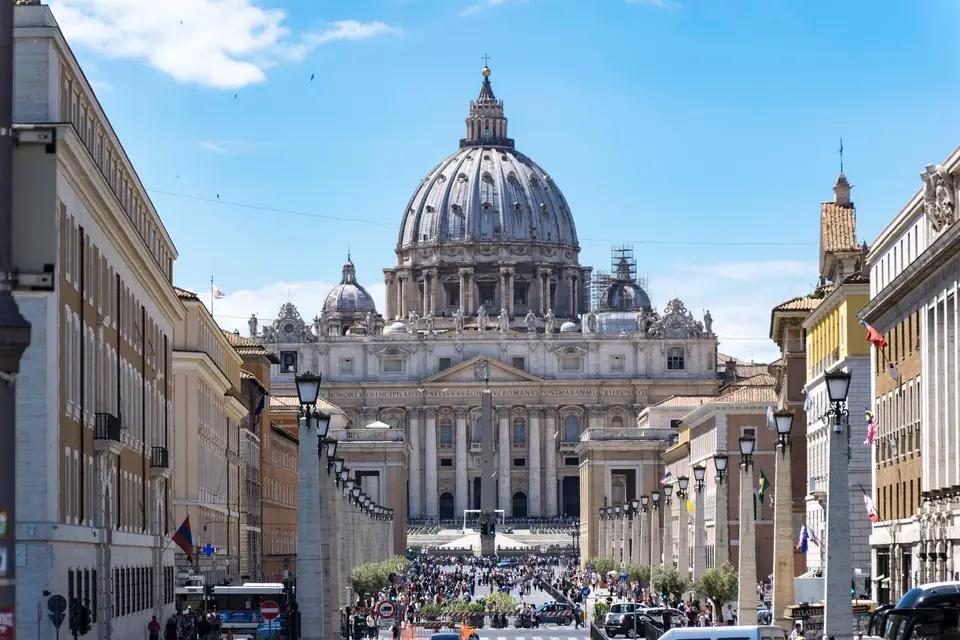
Next comes St Peter’s Basilica, free and open from early morning, with Michelangelo’s Pietà just inside on the right and Bernini’s bronze canopy under the dome. In front of it lies St Peter’s Square. You cross it rather than visit it, but it deserves ten minutes to see how Bernini closed it with two curved arms of columns that seem to gather in whoever arrives.
The dome is the best view of Rome you can buy without leaving the Vatican. You climb on foot or take the lift halfway, and the last stretch is the same narrow staircase for everyone.
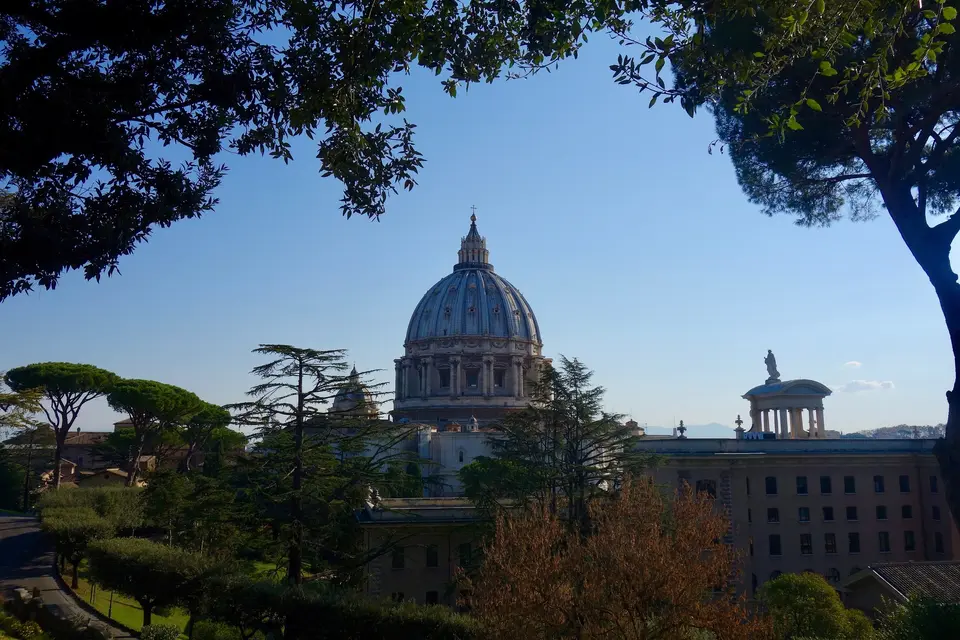
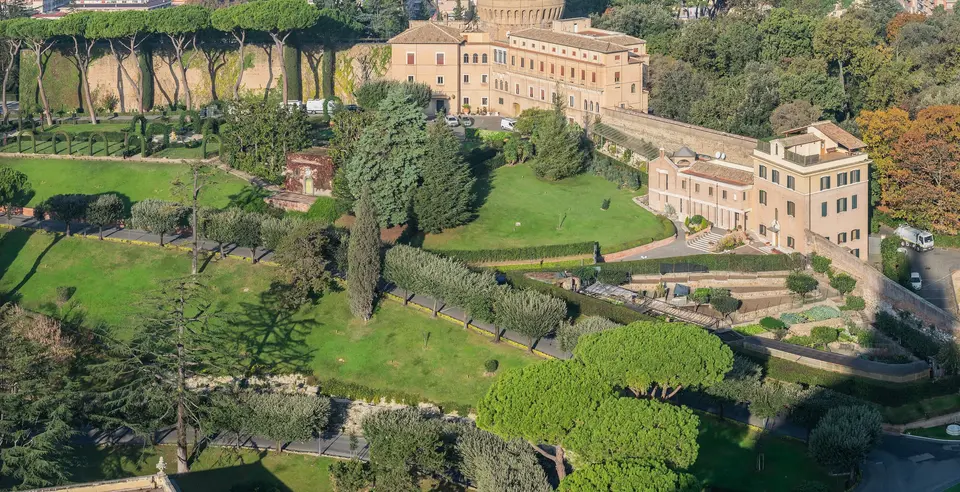
Three more visits need planning ahead. The Vatican Necropolis, where tradition places St Peter’s tomb below the high altar, takes groups of twelve at most. The Vatican Gardens cover half the country and can only be seen on an official tour. And if you want to see the Pope, there is the general audience on Wednesdays and the Angelus at noon on Sundays.
How a day at the Vatican works
The day that works best starts at the Museums entrance on Viale Vaticano, with a ticket bought on the official website for the first slot. At that hour the galleries are still breathable and you can look at the Sistine Chapel properly. Allow three hours.
At lunchtime, head out of the walls. Inside there is nowhere to eat beyond the Museums cafés, and Borgo and Prati are five minutes away. In the afternoon, do the basilica, the Vatican Grottoes and the dome, and leave the square for the end of the day. On a weekday, avoid Wednesday morning unless you are going to the audience, because the square is set up for it and the entrances get congested early.
The practical detail, from the metro to what you cannot bring in your bag and the Vatican dress code, is in the guide on how to visit Vatican City, and prices and ways to buy are in the tickets guide.
The questions people ask about the Vatican as a country
The flag is split vertically into yellow and white. The white half carries the crossed keys of St Peter beneath the tiara. Yellow and white were chosen in 1808, and the current flag was first raised on 8 June 1929.
The currency is the euro. The Vatican has its own coins, minted in Italy with a cap of one million euros a year and much sought after by collectors, so you are unlikely to get one in your change.
The post office is the souvenir that actually works. There is one on the square, open every day from 8.30 to 18.30, and another inside the Museums. A postcard with a Vatican stamp and postmark is the nearest thing to the passport stamp so many people ask about, because that stamp does not exist.
The everyday language is Italian, while Latin is the official language of the Holy See, which is not quite the same thing as the state. The Holy See is the institution that governs the Catholic Church; the state is the territory that supports it.
What looks like the Vatican but is not
Three of Rome’s great basilicas, St John Lateran, St Mary Major and St Paul Outside the Walls, belong to the Holy See and enjoy extraterritorial status, but they stand on Italian soil. The same goes for the palace and villas at Castel Gandolfo, outside Rome, where popes spend part of the summer.
There are no hotels or public restaurants inside the walls either. Everything you can book for the night is in Rome, and I cover it in the guide on where to stay near the Vatican. As for the Swiss Guard, it may look like a costume, but it has served the popes since 1506, with 135 men and an oath sworn every 6 May.
Vatican City in numbers
Fact
Figure
Source
Area
0.44 km²
Governorate of the State
Population
882 (31 Dec 2024)
Governorate of the State
Citizens
618, of whom 246 live inside the walls
Governorate of the State
Became a state
Lateran Pacts, 11 February 1929
Holy See
UNESCO World Heritage
Since 1984
Governorate of the State
Postcode
00120 Città del Vaticano
Poste Vaticane
What each visit costs in 2026
Visit
Price
How to get in
St Peter's Square
Free
Walk in
St Peter's Basilica
Free
Through the security check under the colonnade
Vatican Museums and Sistine Chapel
€20 (€25 booked online)
Official Museums website
St Peter's Dome
€17 by stairs, €22 with the lift (online)
Official basilica website
Necropolis (St Peter's tomb)
€20
Request in advance on the basilica website
Vatican Gardens
From €40 with a guided tour and the Museums
Official tours only
Official prices checked on 24 September 2026. Concessions and free entry are covered in the tickets guide.
Yes. Vatican City has been a sovereign state since the Lateran Pacts, signed with Italy on 11 February 1929. It has its own head of state, flag, anthem, post office and coins, but there are no border controls between it and Rome.
Is Vatican City in Europe?
Yes. It sits in the middle of Rome, on the right bank of the Tiber, so it is an enclave entirely surrounded by Italy. That makes it both a European country and the smallest state in the world by area.
How many people live in Vatican City?
According to the Governorate, 882 people lived in the state on 31 December 2024. There are 618 Vatican citizens, but only 246 of them live inside the walls. Citizenship is not inherited; it comes with the job and ends when the job does.
Do you need a passport to enter Vatican City?
No. There is no border check between Rome and the Vatican, and you simply walk into the square and the basilica. There is no official passport stamp either. The closest thing is a Vatican postmark on a postcard sent from one of its post offices.
What currency does Vatican City use?
The euro. Under an agreement with the European Union the Vatican mints its own euro coins at the Italian mint, capped at one million euros a year, and the ones that are not gold or silver are also legal tender in Italy.
How long do you need to visit Vatican City?
A full day to see the essentials without rushing: around three hours for the Museums and the Sistine Chapel, an hour and a half for the basilica and a good hour more if you climb the dome. Half a day covers the Museums and the basilica, but only just.
What does the Vatican flag look like?
It is split vertically into two halves, yellow next to the pole and white on the fly. The white half carries the crossed keys of St Peter under the papal tiara. Yellow and white were adopted in 1808, and the current flag was first raised on 8 June 1929.
Tourism graduate with a master’s in Tourism Management and Planning from the University of Málaga, who has travelled across Europe. He writes every guide from official sources and his own judgement.